


Tendrils of shadows curl around as my nose buries deeper between the pages, the outside world becomes a noir blur and I only have eyes for the printed words before me. With a slash of a sword pressed suggestively, expertly, against a neck, clammy palms fizz as we teeter on the edge of danger and power within surges. Biting my lip I can see the dark narrowed eyes flicker down to them, with an intensity that causes my stomach to drop. ‘Growling’ is hard to imagine in reality yet makes my betraying heart flutter as I read aloud the breathy, yet cutting response. A fever seems to grip as I desperately turn page by page, playing chicken with my betraying eyes which insist on flickering down to the end of the page before my brain can get there, begging to know what comes next. I’m entrapped, I am the protagonist, the book seems to have seeped into my world as much as it has melted me within the papery fold; the story has come alive.
How do you know you are reading a fantasy novel? Well, the first sign is it’s probably littered with words in italics. Italics are so gratuitously used I get the giggles every time I see this uniquely fantasy-stereotypical emphasis. Because, dear reader, just in case you were ever unclear that the magic powers caused him to fly, it had in fact caused him to fly. I can hear the ‘dun, dun, duunnnn’ strike after every italicized verb… Other tell-tale signs you are weak-kneed deep in fantasy include: growling as a use of seductive vitriol, morally grey love interests, a young (very young) female protagonist; usually feisty, usually over-looked, always entering in her era of full power and grandeur - all whilst typically alluring the most elusive and unattainable of dark haired, dark eyed, devastatingly beautiful men.
I think it’s fair to say it’s unsurprising of my generation to be so enamored by fantasy, the generation of Harry Potter very quickly led to the teenage girl cult following of Twilight. Then again, has the rumblings of a fantasy obsession been historically setting it’s cobble stoned path even further back than you would expect? Afterall, fairytale stories walked so that the fantasy genre could fly - on the back of a grumpy dragon no less. But the original fantasy must surely be mythology: monsters, lovers, enemies, fates, all powerful beings, tragedy and triumph, a land of abundance and unnatural beauty roamed by winged horses, centaurs, cyclops and nymphs. What is the mythology of the Ancient Greek world if not a fantasy realm? You could apply this to any cultural myth or folklore - let’s face it us humans love a fantastical tale.
And if we scrutinise the love of fantasy stories one step closer, a major factor of it’s appeal is, certainly, the walking oxymoron that is the virtuous yet ethically questionable love interest. May I offer the argument of what is Dracula if not an original fantasy tale’s bad boy, the original seductively bad man. In fact this love of brooding men could easily be traced back to the likes of Heathcliff, a man with a dark background, passionate with a demonic soul. Where has this thirst for sexy dark souled men come from? It’s something female readers seem to gravitate to. Jane Austen manages to tap into this, nailing down the love/hate, enemies to lovers troupe but also taunts our obsession with it in Northanger Abbey/ She pokes at fun at the rise of gothic reading young girls with a thirst for the mysteriously haunted men. Perhaps it is the historical sexual repression of women, which drives such a desire for the untouchable, the forbidden. Modern fantasy takes the female gaze a step further (thanks in part to the domination of the genre by female writers), the attraction of these men are the way in which they elevate their women. It’s their utter devotion in the face of their own standing which makes a reader swoon. There’s a balance struck between the woman belonging to him romantically, protectively, but also being besotted by and giving an unwavering devotion to her independent power. After all, what’s more attractive than: ‘My house. My chair. My woman’ (ifkyk).
It was inevitable that the film industry would simultaneously pick up on, and perpetuate further, the fantasy wave. And with good reason, steamy enemy to lover tension aside, the main driver for these kind of tales is undoubtedly the female protagonist and her race to rise against the odds. They tap into every gawky, bookish, underdog girl and empowers them to believe that they too have a shot at making an impact with their lives, or at least would one day grow up from ugly duckling to the Goddess of Seduction. I’ve always struggled with a book to movie transition, but the thing I struggle most with when fantasy novel are re-imagined on the screen, is they constantly cast model-like super women to represent your unassuming girl next door teen. This ultimately forgoes the biggest reason that we love these characters so: their personality. The allure of fantasy is the very fact that an ordinary woman with no discernible advantage at life, has the opportunity to not only save lives around her with her immense power, but bring brooding, ridiculously hot, dangerously powerful men, salivating to their knees. The female protagonists are always quippy, and funny. Dripping with sarcasm and biting comebacks that endear you to them. She’s personal to us readers, she’s so much more than the films ever manage to capture.
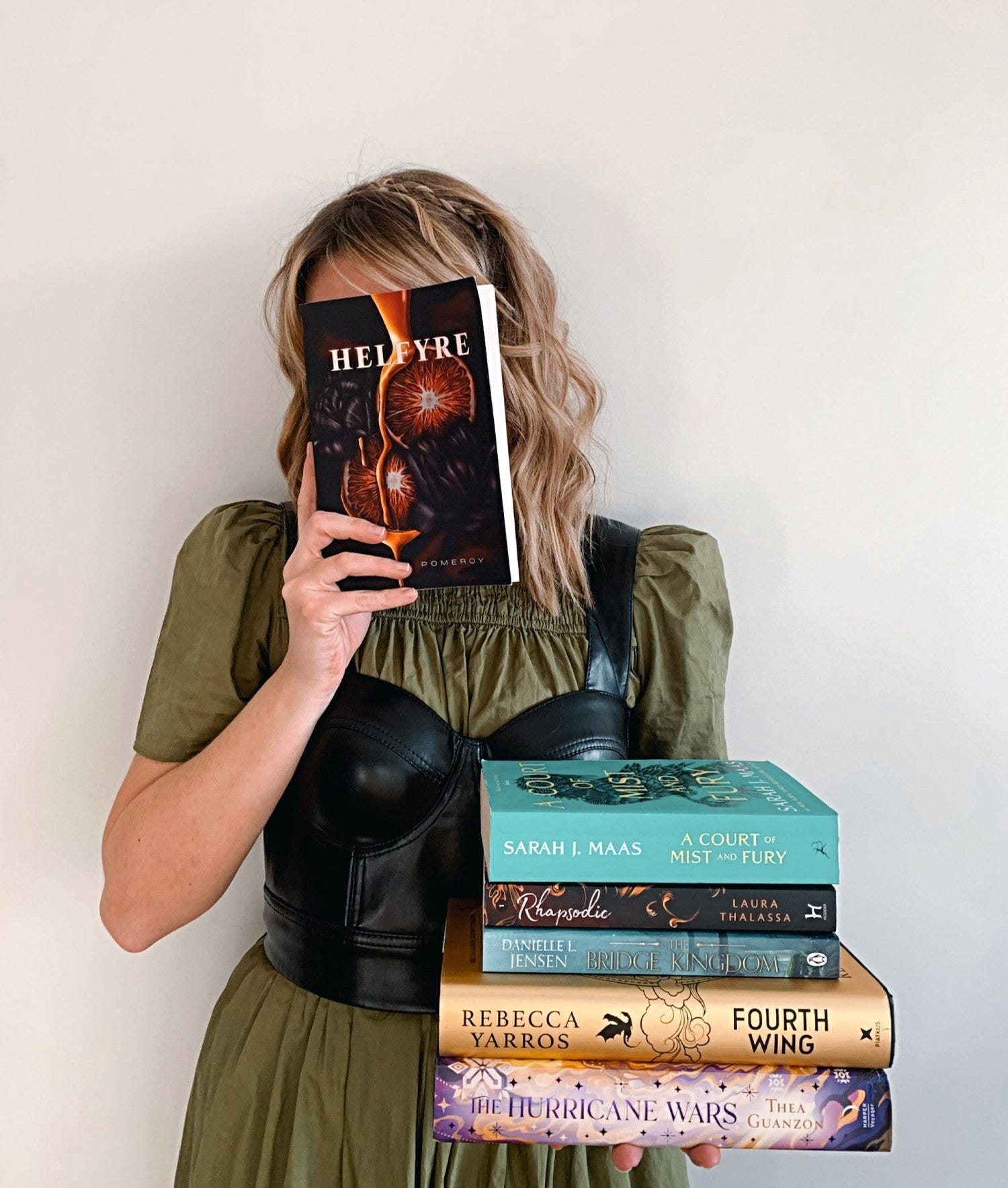
You’ll think me protesting too much when I say it really is the plot which makes a truly great fantasy book (not just the tension and spice, I swear!). For most fantasy enthusiasts world building is key (Fourth Wing), too much world building is a chore (The Hurricane Wars), too much steam can be eye-rolling and the, predictably, adolescent characters can render an adult fantasy reader a little too unrelated to the scenes, especially where the juvenile female leads are making cringe-worthy choices or are being questionably preyed upon (Rhapsodic), choices that perhaps seemed thrilling as a teen reader but are clunky to a 30-something-year-old, at best. Occasionally the plot can be a little trite (ACOTAR) but when an intricate storyline and robustly built characters, with rewarding character arcs, are woven into the seams of this new world that you would give anything to be a part of (ACOMAF), these books can be thrilling. A truly great book, whatever the genre, builds worlds you never want to leave, but nothing does it quite like a fantasy, with a plot that pulls you in it is the only book genre that I can never put down and frenziedly want to devour, whilst simultaneously panicking it’ll all soon be over with every chapter demolished.
As an adult-reader I’ve pulled away from the books my teenage-self obsessed over - perhaps haughtily so. I’ve favoured books I would deem as ‘books you read at school’. These are stories which I would never choose with a craving to read, but if I was forced to under the watchful eye of my English Lit teacher, I would understand the joy of the story. Like eating your greens and realising actually spinach tastes pretty good, especially sautéed with butter and garlic. These sautéed spinach books are fulfilling, clever, thought-provoking and well written. I love them, but I ignored that part of me that gets so much joy from a chocolate-fudge-sundae book full of action, romance, chaotic politics, darkness, heroism, a little bit of magic and mystical creatures.
Is it always sophisticated? Well no. But for the first time in a really long time I felt like I wasn’t just reading a book but I breathed it. I was part of it and it was part of me. I enjoyed being along for the ride, and have in being so captured it started to become harder to distinguish from my everyday reality - the teenage daydream had settled in like a candy-flossed-pink cloud. To be utterly enthralled by the excitement and blinded to the actual room you are sit in by the in-depth clarity of this new, dangerous, glorious fantasy world is, in short, just good fun.