


Maybe it’s the Dickens effect, but there’s something about Christmastime that has the ghost of the past visiting me each year. I don’t mean in a haunting of my own past, although that is somewhat inevitable around the festive period, but I feel an urge to gorge myself on history.
I’ve been a great lover of history for as long as I can remember, there is something about stories from the past which captured me completely from a very young, impressionable age. I remember vividly, my first year at school, in some kind of drama-cum-history lesson, me and my classmates were tasked with the reenactment of Boudicca and her army marching down Watling Street for the final decisive battle against the Roman invaders, which inevitably ended in Boudicca’s heroic martyrdom. Heavy stuff for 5-year-olds, but it was one of the most electrifying moments of my life. I never felt more alive, being part of this play-pretend/educational dramatisation of such a wild and prominent moment in history. Never had I felt so connected (a kind of spiritual awakening) to being human, to being alive, playing a part of a wider story, a story of humanity, of the land, of ancestors, which was even bigger than I ever could’ve imagined. Was it a child-like wonder, hyperactive-imagination, or something genuinely transcendent? I guess it’s up to interpretation, but what I do know is this: as I feverishly watched, with a twinge of envy, the popular girl of my class (who’s name was something like Bryony or Chantel or Rachel and whom our teacher saw fit to bestow such an honourable position to) portray the fearsome Boudicca and gulp down tragically the invisible vial of poison with her tiny hand, thus becoming the mistress of her own dire fate, a last final fierce defiance against the Roman conquerers, I was hooked on history, and the stories of the people who make it.
Perhaps it’s my age, but when I think of Christmas (and what makes me feel Christmassy) my mind always craves history-centric entertainment. I’m very picky about the exact historical moments which illicit Noel-vibes. When I want to snuggle down on a cold December eve, my search is mainly limited to old 80s British TV & film nostalgia, think Monty Python’s Life of Brian or Black Adder. Now maybe this is because I caught them on an initial rerun during my childhood and so it brings back feelings of being a kid again (something Christmas conjures within us all), and perhaps Life of Brian could be argued as definitely a Christmas themed film, but what of Black Adder? Why do I have this urge to see Baldrick bumbling and Queenie dictating in her signature whine whilst munching on my first, slightly warmed up and slavered in double cream, mince pie of the season? It is surely the historic genre that warms my cockles, to see characters don a lacy ruff or a fanciful doublet just makes my heart glow.
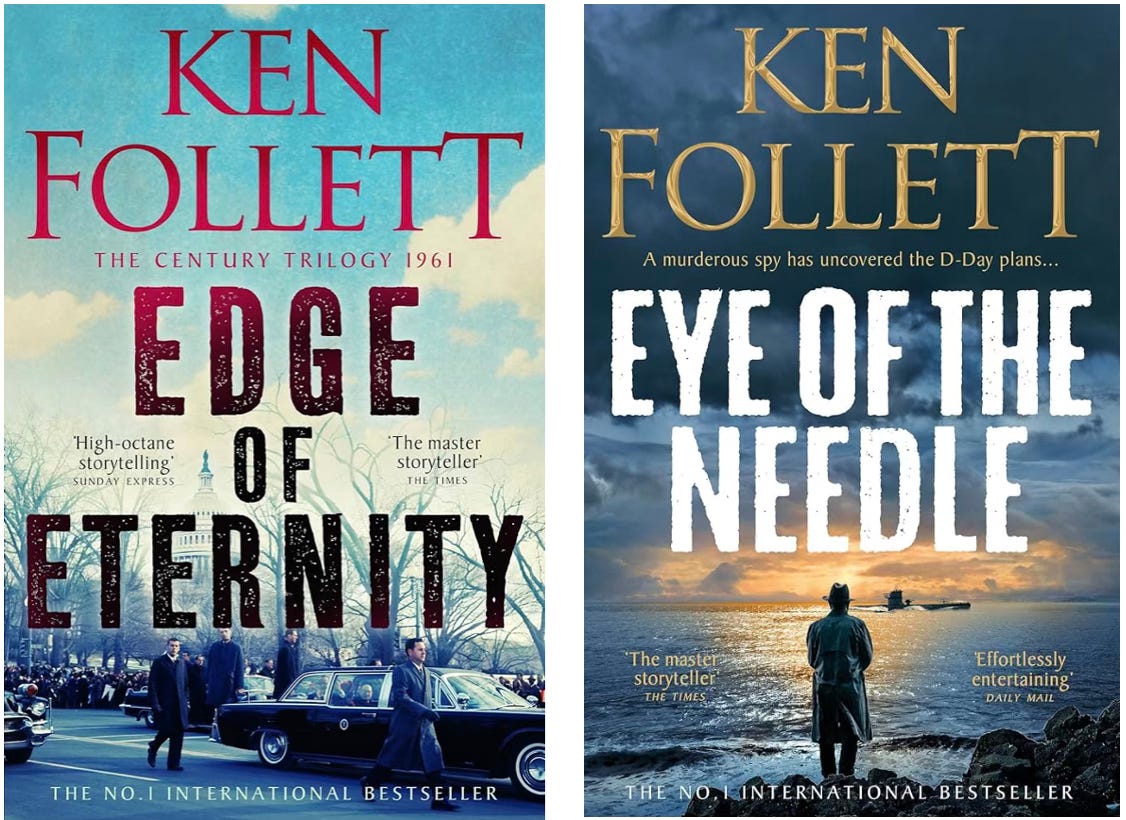
I’ve begun decking my halls and so of course I've dived right back into The Rest is History, a podcast I had taken a break from until the good-tidings had once again arrived. In the past week alone I’ve binge-listened to their series the rise of Queen Elizabeth I (the Tudors and Charles II are firmly in the belongs-to-Christmas-time-camp for me, I’m looking at my copy of Forever Amber and considering this as my final read of the year!) and their two recent series on World War I & II. These aren’t the only wars which give me festive-feels, even the Cold War with it’s clandestine nature, snooping about in bitterly chilly nights, trench coats and the fraught global political game of chess that is just a strike of a match away from imploding (the only kind of spy story I can endure) brings forth a certain seasonal greeting. An author embedded fondly in my mind for these particular historic eras is Ken Follett. I’ve always found his books to not only be entertaining and dripping in historical knowledge (I get a certain, very nerdy, thrill when I recognise a portrayal of an actual historical piece of trivia I know) but incredibly accessible to read, even if you think you aren’t a historic-fiction fan, I think you’ll love his books. Another excellent author with a similar take on history is Kristin Hannah, both her and Follett capture brilliantly the plight of the everyday person during key historical times.
I’m also charging through a series on the poetically-fervent and dramatically melancholic Admiral Nelson, who’s scandalous personal life and legendary naval feats feels me with much glee; there’s something about these Georgians, so full of ennui and wistful lust that I can’t help but feel a warm festive glow in my belly when I’m thrown into their world.
And while this period of history is incredibly Christmassy to me, perhaps a less educational and more entertaining fictional style is required, so I offer up the Russian point of view of the Napoleon War in the form of Tolstoy’s War & Peace. Okay I know, I know, this is literally the poster child for dense, thick literature but it is a fiction that is dripping in reflective social commentary of Russia during the turn of the 18th century and devastating historical events, which act as a backdrop to the tale’s themes of family, love, tragedy and sacrifice and the strive to find purpose, a meaning in life, and ultimately finding it in loved ones and legacy through one’s own family and friends…what more of a classic Christmas tale could you ask for?! There is even plenty of snowy wintery weather!
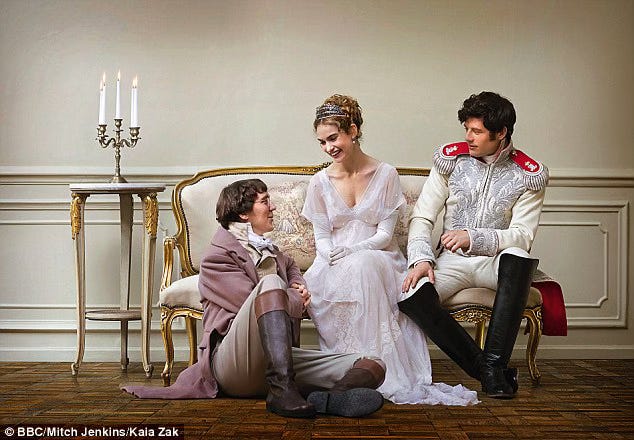
It feels like a literary feat every book lover must tackle, and one I have been daring myself to do for many years, however if, like me, the heft of it is a little too intimidating then the BBC adaptation from 2016 is a beautiful retelling. Not to get too involved in the recent Tarantino debate, but Paul Dano is so earnest and well-suited as Pierre (the good-natured if naive, young, idealist count). I think of his and Lilly James’ (Natasha) sweet, tender onscreen chemistry often, and long to get back to them each and every blustery December - not to mention visually the production and costume design is a gorgeous dream. If you are fancying a book challenge though, I can’t think of a better time to try and tackle such a book. Imagine, during the time-warp period between Christmas Day and New Year’s Day, immersing yourself into an easy 1,2096 page(!) classical Russian literature - I reckon it’s doable.
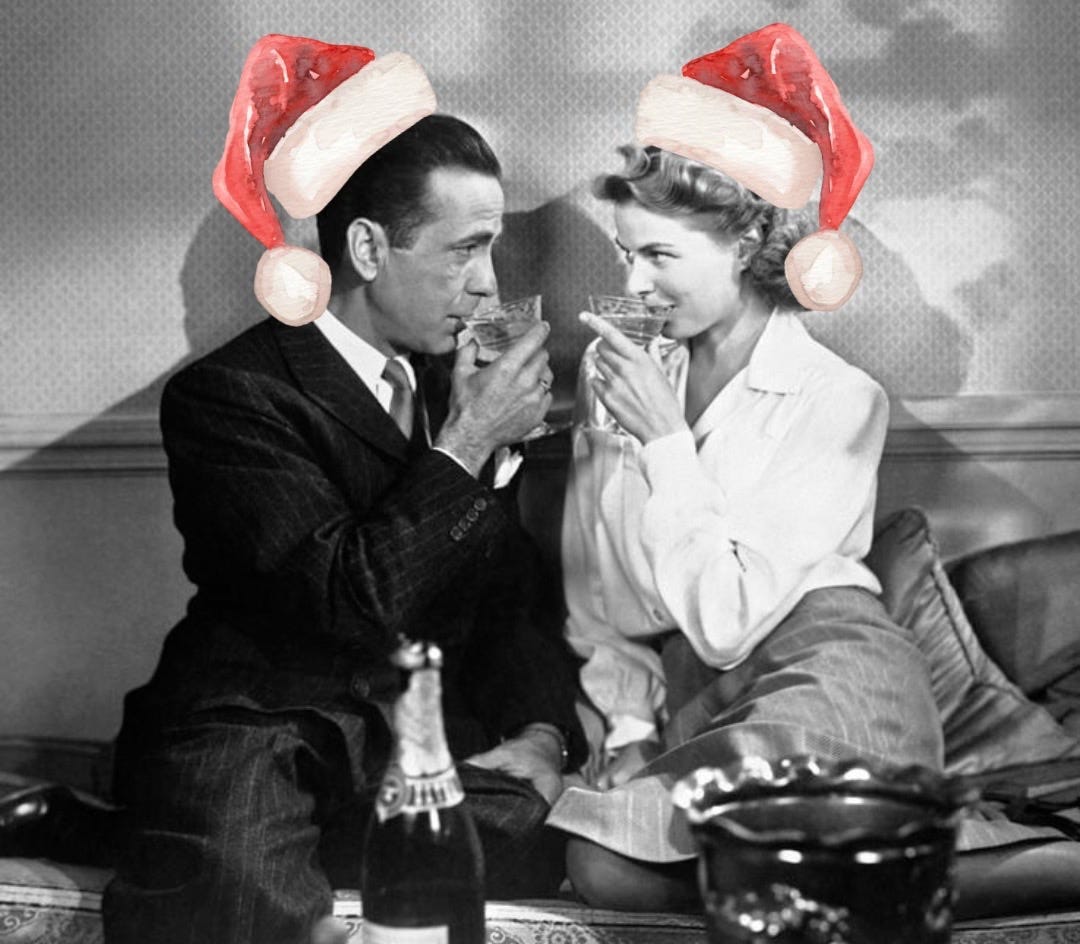
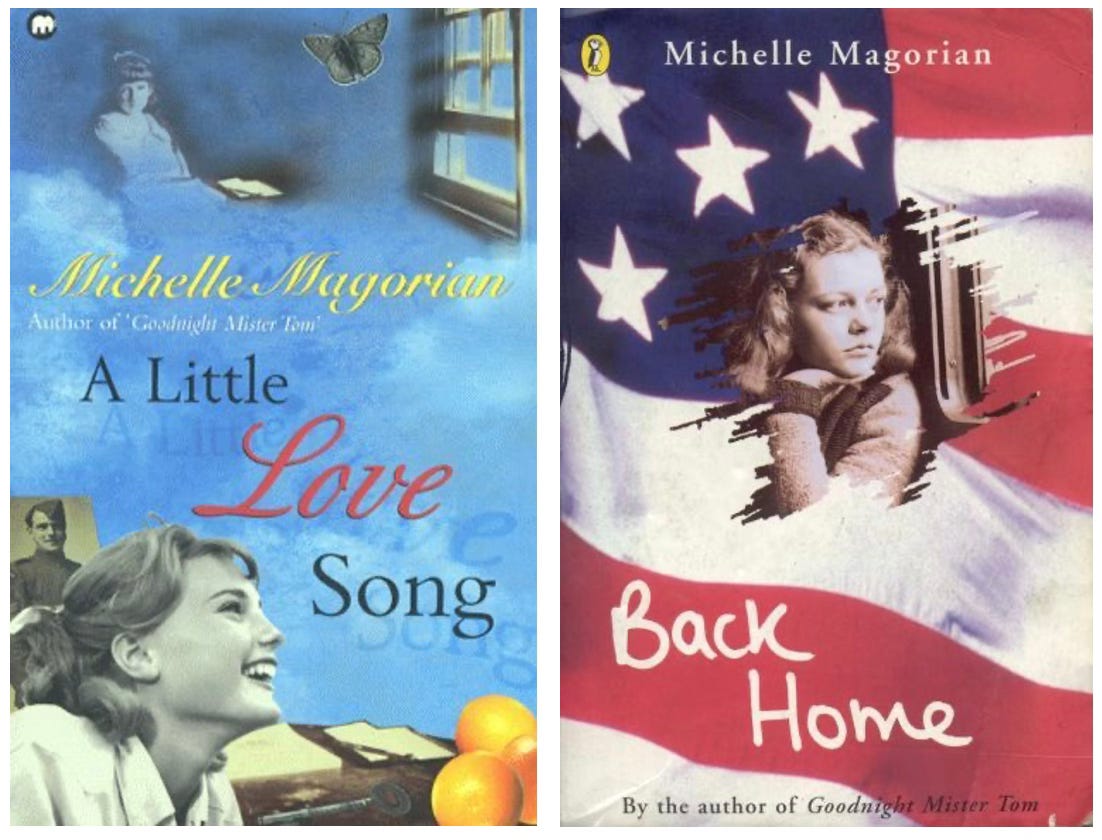
Possibly the closest and most logical period of history to align with Christmas is of course the Victorian era. For me, Christmas is re-watching A Muppets Christmas Carol for the umpteenth time while wrapping up presents with my sister (lamenting at the obfuscation of the song: When Love Is Gone, whilst also secretly pleased to not be put through the heartache of it again, remembering how traumatised we both were having been subjected to it on our old VHS tape) and ending up teary-eyed every time by Scrooge’s heartfelt redemption, opening himself up to love once more. While this is an obvious Christmas themed film (although it being set in Victorian London still solidifies my argument that it is, in fact, historical fiction that makes for a festive experience), my most loved film of all at Christmastime is Casablanca. Not one inch of Christmas-cheer within it and yet, it’s my go to holiday film and never fails to put me in the festive spirit. The Guernsey Literary & Potato Peel Pie Society is another go to film this time of year, which makes me think of the books I used to re-read each year when I was a teenager, which all tended to be set during British wartime. Books by the likes of Michelle Morgan (author of Goodnight, Mister Tom), were particular favourites of mine (they are possibly my most well-thumbed and battered copies sitting on my bookshelf), most notably: Back Home and A Little Love Song, both having a combination of classic war spirit and determined young women and girls full of gumption, stole my heart. I guess there’s just something about mid-20th century defiance against the Nazi’s that really puts a sparkle in my month.
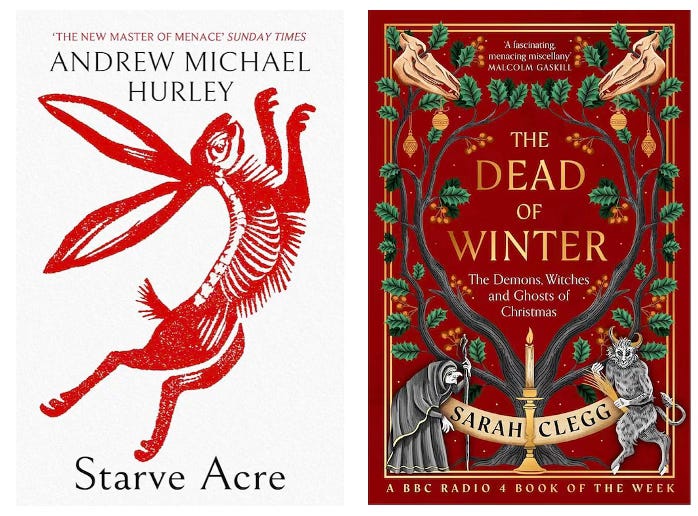
My argument is not entirely skewed by a sense romanticism of the past either, the level of comfort I get at seeing old clips of Horrible History episodes is perhaps shared by many, but not so much as by my brother who can go toe to toe with me on all the facts (and the songs), and is proof that the depravity is an insatiable part of learning about the past. History’s darkness lends itself perfectly to the festive period, something Sarah Clegg recognised and delves into in her book The Dead of Winter. Folk-lore tales are numerous around Christmas/Winter Solstice so, in fact, facing head on at the horror of the past makes for a yule-tide tradition. If a historic-horror resonates more with you this Christmas then Starve Acre takes on a folk legend/curse which captures a married couple who have tragically lost their young son, making this a perfect ghostly, horror-fuelled, historical festive read.
Not all historic eras, of course, are for Christmas consumption. I would like to say I made up the rules but I think you would agree that other historical periods just suit other times of the year. For example, to name but a few, American Civil War and Ancient Rome belong to Autumn, Ancient Egypt and Greek Mythology are for Summer. It’s not me, it’s just the laws of seasons.
On the face of it, it may seem that weather is the main contributing factor, and I won’t lie, I am a seasonal reader so setting does play a huge part. And part of it is that this time of year brings out an overwhelming sense of nostalgia, the question I ponder is whether this is organic or ultimately a feeling fed by the consumerist giant; the influence of BBC specials, John Lewis or Sainsbury’s adverts (I still think of one with soldiers meeting over the trenches on Christmas Day for a game of football and a day of peace). Or is it the nature of the season, where hibernation and long dark nights induces this kind of reflective calling - a tentative, pink chapped hand bundled in mittens, reaching out for the past - Charles Dickens felt this for sure. A time when the veil between worlds is at its thinnest, a festival season which is shared (in whichever celebratory way) by a millennia of people throughout history.
History is made up of those before us building a story, a culture and tradition, of people overcoming great tragedies, braving great feats, of finding peace and love within a community, and so to look back at all these things, during a time of year full of tradition and ceremony, just makes sense. It could be argued that media feeds culture, but I choose not to believe it in the case of Christmas, sure media and corporate marketing perpetuates the feeling, but it’s the instinctual fundamental belief which drives the magic. We only have to look at this year’s media sensation of having a ‘Little Women Christmas’, as proof of our need to connect with the past. So many of us have strived for a less consumerist holiday and have craved making and building things with nature, repurposing scraps, sealing with love and doing these things together with those dear to us - a need to capture the Christmas spirit by rejecting modern fancies and recapturing what this time of year was always originally intended for. This is what I believe the meaning to be behind all the multi-coloured paper chains and garlands of dried oranges.
And so, with all this obsessive history madness in mind, here is the full list my Christmas Syllabus, bound to get you feeling festive in the most subtle way imaginable:
Classic Literature:
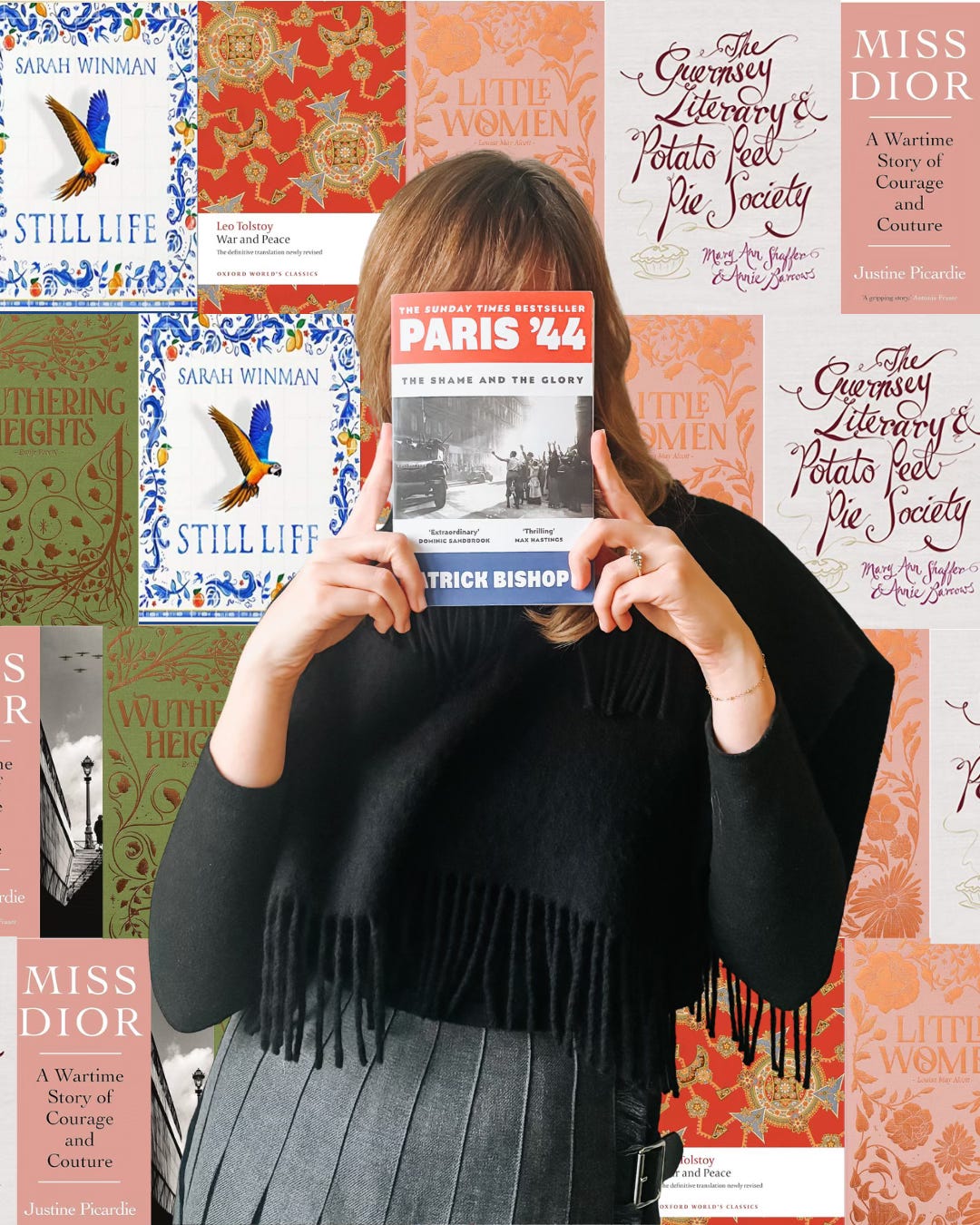
War & Peace by Leo Tolstoy
Wuthering Heights by Emily Brontë
Little Women by Louisa May Alcott
Historical Non-Fiction:
Miss Dior by Jodi Picoult
Paris ‘44 by Patrick Bishop
Historical Fiction:
Edge of Eternity AND/OR Eye of the Needle by Ken Follett
Forever Amber by Kathleen Winsor
Still Life by Sarah Winman
Hamnet by Maggie O’Farrell
Creepy Folklore:
Starve Acre by Andrew Micheal Hurley
The Dead of Winter by Sarah Clegg
Perhaps, on reflection, my insistence that historical fiction/non-fiction is indeed in the Christmas spirit, is nothing more than evidence that my gifting guide for family and friends has likely been a wish list of historical genre books. It has to be said a lot of the syllabus was gifted to me as presents…
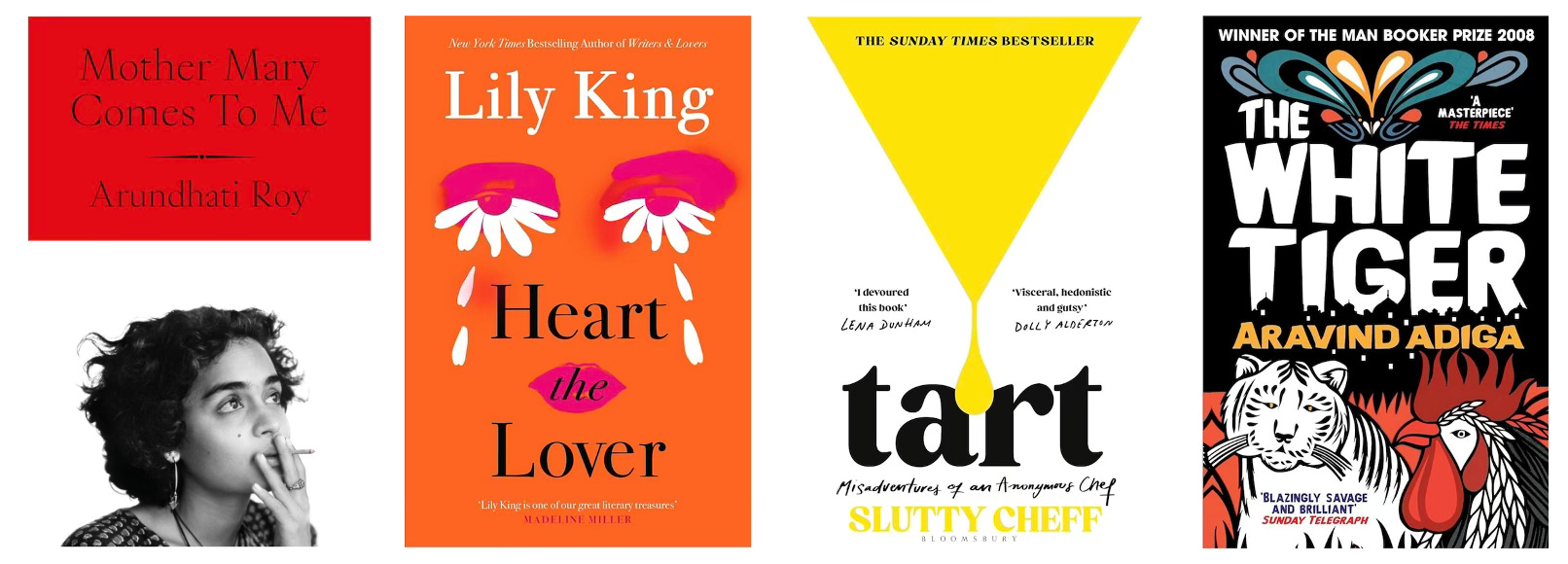
However, if my wish list this year is anything to go by then 2025 is an exception to the rule, because my list is clearly made up of books to be read over the Easter holidays...
Here’s hoping I’ve placed in your mind a fair argument for historical entertainment being the ultimate Christmas past-time, or else I’ve only succeeded in highlighting to you my utter romantic and morbid obsession with the past. I’m happy with that outcome either way.
Merry Christmas to all, however you may enjoy it!
What a fabulous read! It’s eclectic, comforting AND mischievous. Love it! 🧡